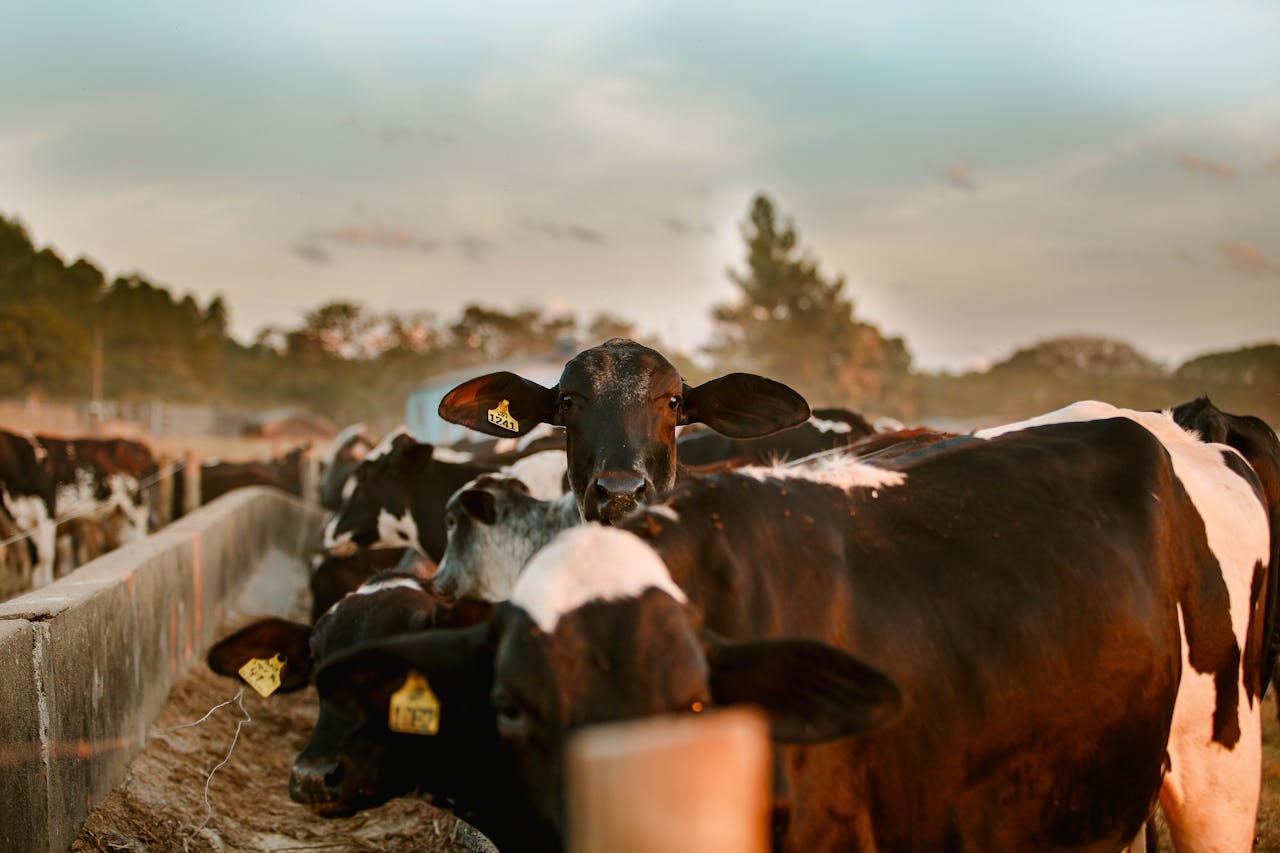
The First Rule: Do Not Wait Until Feed Is Finished
Many farmers start looking for feed when cows are already hungry.
By that time:
* hay and silage prices may have increased;
* good quality feed may be hard to find;
* cows may already be losing body condition;
* milk production may already be falling.
The best time to prepare for drought is before the drought arrives.
A smart farmer treats dry-season feeding like school fees, something to plan for early, not an emergency to solve at the last minute.
Keep Forage Available Every Day
Milk production depends on daily feed intake. When cows spend long hours without forage, milk drops quickly.
During drought, cows should have reliable access to:
* maize silage;
* good quality hay;
* dry grass reserves;
* crop residues where suitable;
* protein supplements.
Maize silage is especially useful because it provides energy, improves intake, and helps maintain milk production when pasture is limited.
Hay is also important because it provides fibre and helps keep the rumen working properly.
Feed the Best Cows First
During drought, feed may not be enough for every animal to receive the same level of attention.
This is where business thinking becomes important.
Prioritize:
* lactating cows;
* high-producing cows;
* recently calved cows;
* pregnant cows nearing calving;
* young replacement heifers.
A dry cow and a high-producing cow should not be fed the same way. The cow producing milk every day needs more nutrients because she is generating daily income.
Protect Body Condition
A cow can hide a feeding problem for a short time by using her body reserves to continue producing milk.
But this is dangerous.
When cows lose body condition:
* milk production falls;
* fertility becomes poor;
* recovery after drought takes longer;
* veterinary problems may increase.
Check cows regularly. If ribs, backbone, and hip bones are becoming too visible, the feeding program is not enough.
Do not wait until the cow is very thin before taking action.
Do Not Forget Protein
Many drought feeding programs focus only on filling the stomach.
But cows do not need bulk alone. They need nutrients.
Poor-quality dry grass may keep the cow chewing, but it may not provide enough protein for milk production.
Where possible, add protein sources such as:
* calliandra;
* desmodium;
* lucerne;
* legume hay;
* good dairy meal.
Protein helps support milk production, body condition, and fertility.
Water Becomes Even More Important
During drought, water sources may reduce, yet cows need water more than ever.
A milking cow may drink many litres of water every day, especially in hot weather. If water intake reduces, feed intake also reduces. When feed intake falls, milk production drops.
Keep water:
* clean;
* available throughout the day;
* close to the feeding area;
* enough for all cows.
Never treat water as a secondary issue. For milk production, water is part of feeding.
Avoid Sudden Feed Changes
When drought comes, farmers often change feeds quickly because they are trying to survive.
But sudden feed changes can disturb digestion and reduce milk.
Introduce new feeds gradually where possible. Mix new feed with the old feed for a few days so the cow’s rumen adjusts.
A stable rumen means better digestion and more consistent milk.
Reduce Feed Wastage
During drought, every kilogram of feed matters.
Avoid wastage by:
* using proper feed troughs;
* keeping hay off the ground;
* opening only enough silage for immediate use;
* protecting feed from rain, sun, and contamination;
* giving feed in controlled amounts.
Feed wasted during drought is money lost twice, first when buying it, and again when milk reduces.
Keep Simple Records
You cannot manage what you do not track.
During drought, record:
* daily milk production;
* feed used;
* cows losing condition;
* feed purchases;
* water availability.
These records help the farmer know early whether the feeding plan is working or failing.
If milk begins to drop, the farmer can respond before the loss becomes serious.
The Bottom Line
Drought affects dairy farming, but it does not have to destroy milk production.
Farmers who maintain milk during drought usually do five things well:
* prepare feed early;
* use hay and maize silage;
* protect body condition;
* provide clean water;
* reduce feed wastage.
The goal is not only to survive the dry season. The goal is to keep cows productive, healthy, and ready to continue producing when conditions improve.
Take Action
Do not wait for drought to reduce your milk income.
Radiant Farm Uganda Limited provides quality hay and maize silage to help dairy farmers maintain feeding, protect cow condition, and keep milk production stable during dry periods.
📞Contact Radiant Farm today and prepare your cows for every season.🐄🌽🌾
Order forage from our website (click here) or from the nearby authorised dealer (click here to find out more)
😉 Call / WhatsApp to confirm your Hay or Maize silage ORDER NOW!
📲📞 +256 790 810 337
📲📞 +256 702 350 821
📲 📞+256 702 760 564
📩 Email: kampala@radiantfarmug.com
📍 Farm Location: Plot 5 Kitotolo Road, Nsangabwami Kikandwa, Mityana - Uganda.
By Oliver Namirimu,
The Manager - Production and Operations at Radiant Farm, specializing in sustainable farming practices and animal nutrition.
Please subscribe to our newsletter ( https://radiantfarmug.com/ ) for more updates from Radiant Farm Uganda.