
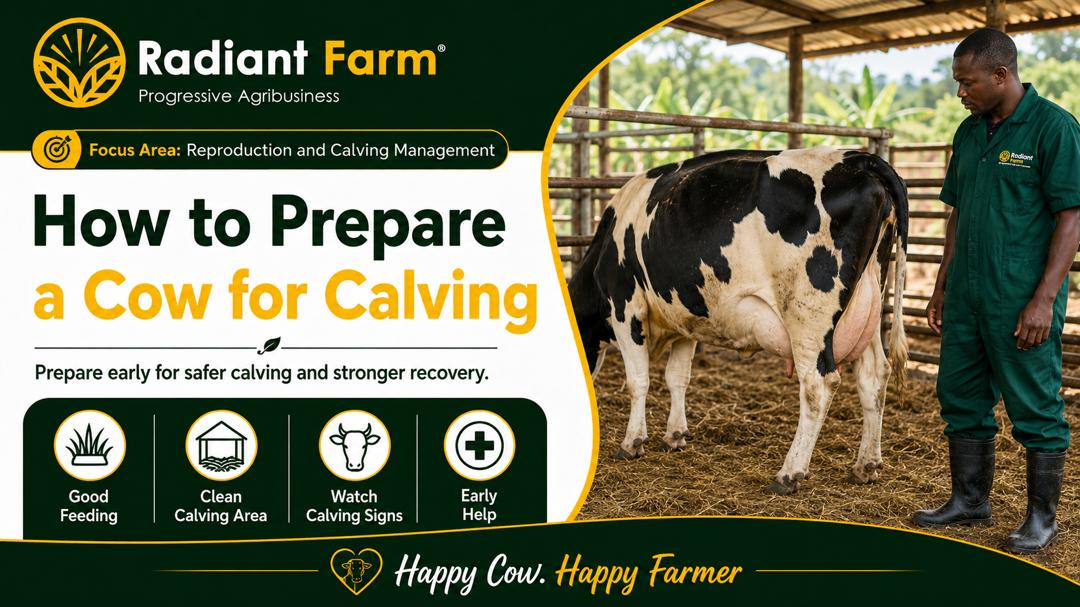
1. Give the Cow Proper Nutrition
A pregnant cow needs enough quality feed to support her body and the growing calf.
In the final weeks before calving, provide:
* good quality hay or silage;
* enough clean water;
* minerals;
* protein sources where needed;
* a calm feeding routine.
Do not allow the cow to become too thin or too fat. Both can cause problems during and after calving.
2. Prepare a Clean Calving Area
The cow should calve in a clean, dry, and comfortable place.
A dirty calving area can expose both the cow and calf to infections.
Before calving:
* remove dung;
* keep the floor dry;
* provide clean bedding where possible;
* reduce mud and stagnant water;
* avoid overcrowding.
Clean surroundings protect the calf and reduce infection risks for the cow.
3. Watch for Calving Signs
As calving approaches, the cow may show signs such as:
* swollen udder;
* relaxed tail area;
* restlessness;
* reduced feeding;
* lying down and standing often;
* clear discharge;
* separation from other cows.
Farmers should observe the cow closely, especially in the final days before calving.
4. Have Help Ready
Most cows calve naturally, but problems can happen.
Do not wait too long if the cow is struggling.
Call a veterinary worker early if:
* labour takes too long;
* the calf appears wrongly positioned;
* the cow is too weak;
* there is heavy bleeding;
* the placenta delays for many hours;
* the cow has fever or bad-smelling discharge after calving.
Early help can save both the cow and calf.
5. Care for the Calf Immediately
After birth, make sure the calf is breathing, dry, and warm.
The calf should receive colostrum (the first milk), as soon as possible. Colostrum helps build immunity and gives the calf a strong start.
A weak start can affect the calf’s future growth and productivity.
6. Support the Cow After Calving
After calving, the cow needs rest, clean water, good feed, and close observation.
Watch for:
* poor appetite;
* fever;
* retained placenta;
* swollen udder;
* low milk;
* weakness;
* bad-smelling discharge.
The first days after calving are critical for future milk production and fertility.
The Bottom Line
Preparing a cow for calving is good farm management.
A farmer should focus on proper feeding, good body condition, clean housing, close observation, early veterinary support, and good care for both cow and calf.
A well-prepared cow has a better chance of safe calving, strong milk production, faster recovery, and better future fertility.
Take Action
Do not wait until calving starts before preparing.
Check your pregnant cows early, improve feeding, prepare a clean calving space, and plan for veterinary support where needed.
Radiant Farm Uganda Limited supports dairy farmers with practical dairy knowledge, quality hay, and maize silage to help build healthier, more productive, and more profitable dairy farms.
📞Contact Radiant Farm today and support your cows for safer calving, better milk, and stronger farm returns.🐄🌽
Order forage from our website (click here) or from the nearby authorised dealer (click here to find out more)
😉 Call / WhatsApp to confirm your Hay or Maize silage ORDER NOW!
📲📞 +256 790 810 337
📲📞 +256 702 350 821
📲 📞+256 702 760 564
📩 Email: kampala@radiantfarmug.com
📍 Farm Location: Plot 5 Kitotolo Road, Nsangabwami Kikandwa, Mityana - Uganda.
By Oliver Namirimu,
The Manager - Production and Operations at Radiant Farm, specializing in sustainable farming practices and animal nutrition.
Please subscribe to our newsletter ( https://radiantfarmug.com/ ) for more updates from Radiant Farm Uganda.