
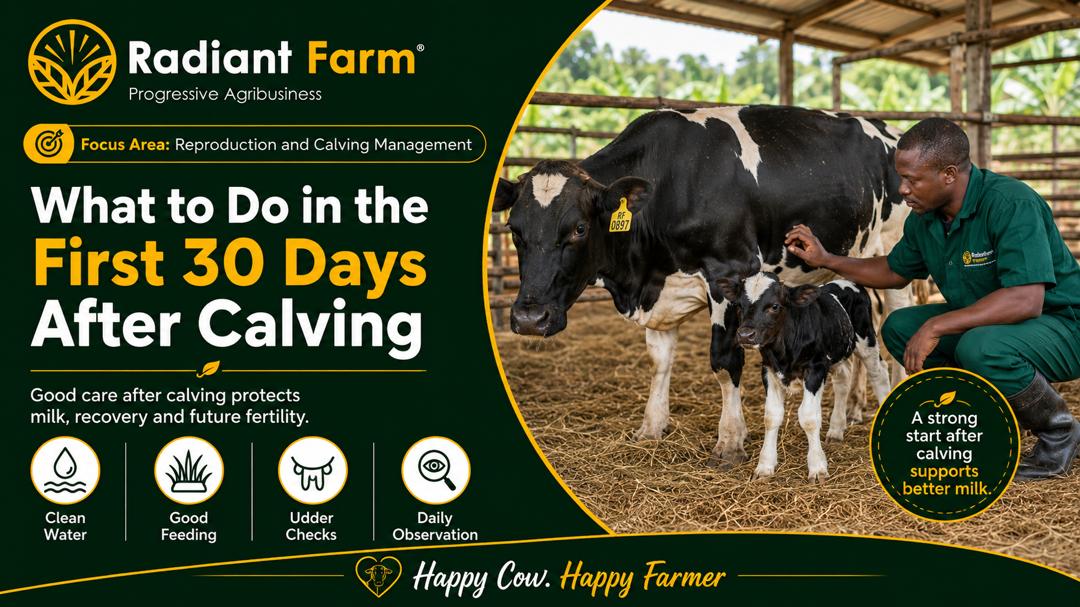
1. Give Clean Water Immediately
After calving, the cow needs plenty of clean water.
Water helps her recover, eat better, and support milk production. If water is limited, feed intake reduces, and milk production may suffer.
Keep clean water near the cow at all times.
2. Feed Her Well
A cow uses a lot of energy after calving.
She needs quality feed to produce milk, regain strength, and maintain body condition.
Provide:
* good hay or maize silage;
* protein where needed;
* minerals;
* clean water;
* a consistent feeding routine.
Avoid sudden feed changes. Introduce feeds gradually to protect digestion.
3. Watch for Health Problems
The first days after calving can expose hidden problems.
Watch out for:
* fever;
* poor appetite;
* retained placenta;
* bad-smelling discharge;
* swollen udder;
* low milk;
* weakness;
* difficulty standing.
If you notice any of these signs, seek veterinary support early.
4. Check the Udder Daily
Early milk production puts pressure on the udder.
Check for swelling, pain, heat, wounds, or abnormal milk. These may be early signs of mastitis.
Clean milking and a dry cowshed help protect the udder during this sensitive period.
5. Protect Body Condition
Some cows lose too much weight after calving because they are producing milk but not eating enough.
If the ribs, backbone, or hips become too visible, the cow may be under nutritional stress.
A cow that loses too much condition may delay coming on heat and struggle to conceive again.
6. Keep Records
Record the calving date, milk production, health signs, treatments, and when the cow first shows heat again.
Simple records help the farmer make better decisions and know when to call for help.
The Bottom Line
The first 30 days after calving can determine the cow’s milk performance, recovery, and future fertility.
Good farmers focus on clean water, quality feeding, udder care, body condition, health monitoring, and simple records.
A well-managed cow after calving is more likely to produce better milk, recover faster, and return to heat on time.
Take Action
Do not relax after the calf is born. The first month after calving needs close attention.
Support your cow with good feeding, clean water, hygiene, and daily observation.
Radiant Farm Uganda Limited supports dairy farmers with practical dairy knowledge, quality hay, and maize silage to help build healthier, more productive, and more profitable dairy farms.
📞Contact Radiant Farm today and support your cows for better recovery, better milk, and better farm returns.🐄🌽
Order forage from our website (click here) or from the nearby authorised dealer (click here to find out more)
😉 Call / WhatsApp to confirm your Hay or Maize silage ORDER NOW!
📲📞 +256 790 810 337
📲📞 +256 702 350 821
📲 📞+256 702 760 564
📩 Email: kampala@radiantfarmug.com
📍 Farm Location: Plot 5 Kitotolo Road, Nsangabwami Kikandwa, Mityana - Uganda.
By Oliver Namirimu,
The Manager - Production and Operations at Radiant Farm, specializing in sustainable farming practices and animal nutrition.
Please subscribe to our newsletter ( https://radiantfarmug.com/ ) for more updates from Radiant Farm Uganda.