1. Start With Colostrum
The first milk after calving, called colostrum, is very important.
It helps protect the calf against disease and gives it strength in the first days of life.
A calf should receive colostrum as soon as possible after birth, preferably within the first few hours.
A weak start can affect the calf’s growth and survival.
2. Keep the Calf Warm and Dry
Newborn calves are sensitive.
After birth, make sure the calf is breathing well, dry, and protected from cold, rain, mud, and wind.
A wet or cold calf becomes weak quickly and may fail to suckle properly.
A clean, dry resting place helps the calf recover and grow.
3. Maintain Clean Housing
Calves are easily affected by dirty environments.
Dirty bedding, wet floors, dung, and poor drainage can cause diarrhea, pneumonia, and other infections.
Keep the calf area:
* dry;
* clean;
* well ventilated;
* protected from overcrowding;
* free from stagnant water.
Clean housing reduces disease risk.
4. Feed Properly
After colostrum, calves need regular feeding to grow well.
Provide clean milk or milk replacer where used, clean water, and gradually introduce quality calf starter and soft forage as the calf grows.
Avoid dirty feeding containers. Wash buckets and bottles after every feeding.
Good feeding builds strong future cows.
5. Watch for Early Signs of Sickness
Calves can become sick very fast.
Look out for:
* diarrhea;
* coughing;
* weakness;
* poor suckling;
* sunken eyes;
* difficulty breathing;
* dullness;
* rough hair coat.
If these signs appear, act early and seek veterinary advice.
6. Keep Simple Records
Record the calf’s birth date, mother, feeding routine, sickness, treatments, and growth progress.
Simple records help the farmer know which calves are growing well and which ones need attention.
Good records also support future breeding decisions.
The Bottom Line
Healthy calves do not happen by chance.
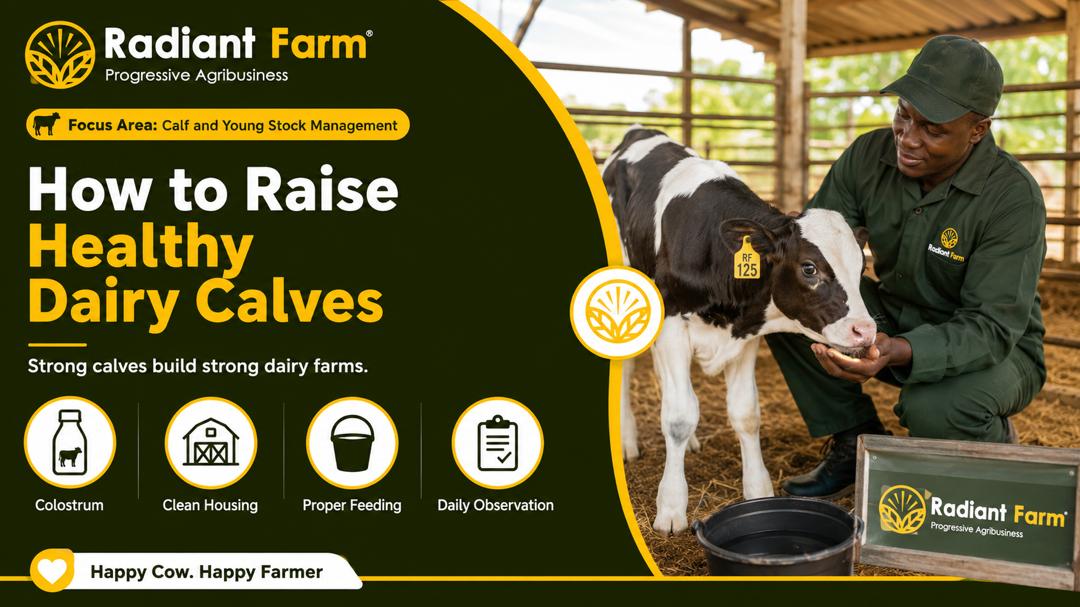
They need colostrum, warmth, clean housing, proper feeding, daily observation, and simple records.
A farmer who raises calves well is investing in the future of the dairy farm.
Strong calves become strong heifers. Strong heifers become productive cows.
Take Action
Do not wait until a calf becomes weak before improving care.
Start with good colostrum, clean housing, proper feeding, and close observation from day one.
Radiant Farm Uganda Limited supports dairy farmers with practical dairy knowledge, quality hay, and maize silage to help build healthier, more productive, and more profitable dairy farms.
📞Contact Radiant Farm today and invest in the future of your dairy herd.🐄🌽
Order forage from our website (click here) or from the nearby authorised dealer (click here to find out more)
😉 Call / WhatsApp to confirm your Hay or Maize silage ORDER NOW!
📲📞 +256 790 810 337
📲📞 +256 702 350 821
📲 📞+256 702 760 564
📩 Email: kampala@radiantfarmug.com
📍 Farm Location: Plot 5 Kitotolo Road, Nsangabwami Kikandwa, Mityana - Uganda.
By Oliver Namirimu,
The Manager - Production and Operations at Radiant Farm, specializing in sustainable farming practices and animal nutrition.
Please subscribe to our newsletter ( https://radiantfarmug.com/ ) for more updates from Radiant Farm Uganda.