
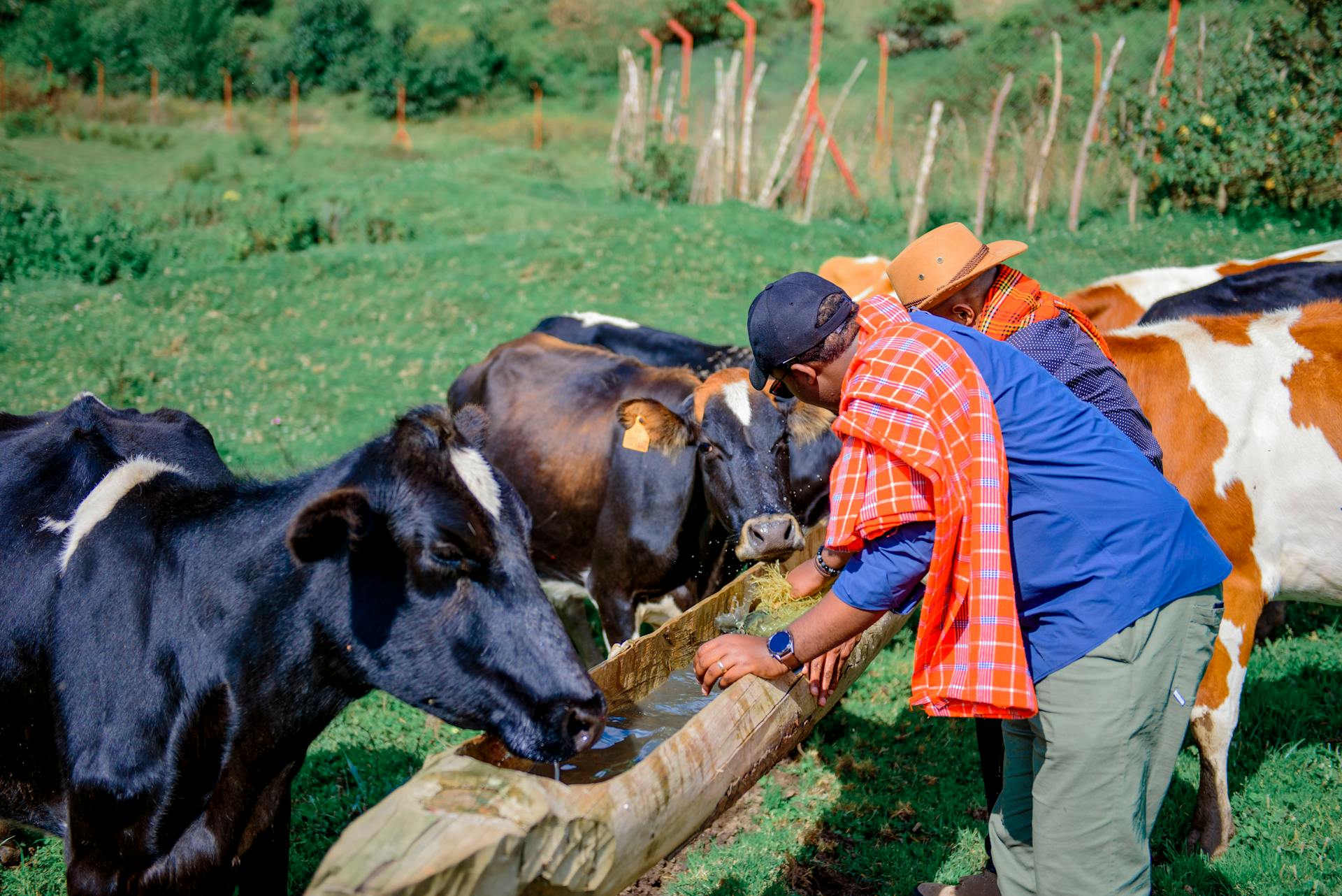
Milk Is Mostly Water
Here is a simple fact many farmers overlook: milk is about 85–87% water.
This means that every litre of milk a cow produces requires a significant amount of water in the body. If water intake drops, milk production usually drops almost immediately.
For example:
• A cow producing 10 litres of milk needs large amounts of water to support that production.
• A cow producing 20 litres will require even more.
Simply put, no water, no milk.
How Much Water Does a Dairy Cow Need?
The amount of water a cow needs depends on several factors such as weather, body size, and milk production.
On average:
• A lactating dairy cow may drink 60–100 litres of water per day.
• During hot weather, the amount can be even higher.
Cows usually drink more water after eating and after milking, so water should always be available during these times.
Signs Your Cows May Not Be Getting Enough Water
Sometimes farmers do not realize that water supply is limiting milk production. Watch for these signs:
• Sudden drop in milk yield
• Reduced feed intake
• Cows crowding around water points
• Cows appearing restless or weak
• Thick or reduced manure output
When cows cannot drink enough water, they also eat less feed, which further reduces milk production.
Common Water Mistakes on Dairy Farms
Many dairy farms unknowingly make simple mistakes that limit water intake.
Some common issues include:
1. Dirty water troughs
Cows avoid drinking contaminated or muddy water.
2. Water sources that are too far away
If cows must walk long distances, they drink less frequently.
3. Limited watering times
Providing water only once or twice per day can restrict intake.
4. Small water containers
When many cows share one small trough, some animals drink less.
Simple Ways to Improve Water Intake
Improving water access does not require expensive investment. A few practical changes can make a big difference.
Farmers can:
• Provide clean water at all times
• Clean water troughs regularly
• Place water near feeding areas
• Ensure enough space for multiple cows to drink
• Refill troughs frequently during hot weather
These small improvements often lead to noticeable increases in milk production.
Water and Feed Work Together
Even the best feeds cannot work properly without enough water.
Cows need water to:
• Digest forage and concentrates
• Absorb nutrients
• Maintain body temperature
• Produce milk efficiently
In other words, water helps the cow convert feed into milk.
The Bottom Line
While feeds like hay, silage, and dairy meal are important, water is the foundation of dairy cow nutrition.
When cows drink enough clean water, they:
• Eat more feed
• Produce more milk
• Stay healthier
• Maintain better body condition
Sometimes the simplest improvement on a dairy farm is also the most powerful.
📞 Take Action
Good milk production depends on consistent feeding and proper nutrition.
Radiant Farm Uganda Limited supports dairy farmers with quality hay and maize silage to ensure cows receive reliable feed throughout the year, especially during dry seasons.
Contact Radiant Farm today and keep your cows productive in every season by ordering forage from our website (click here) or from the nearby authorised dealer (click here to find out more)
🐄🌾😉 Call / WhatsApp to confirm your Hay or Maize silage ORDER NOW!
📲📞 +256 790 810 337
📲📞 +256 702 350 821
📲 📞+256 702 760 564
📩 Email: kampala@radiantfarmug.com
📍 Farm Location: Plot 5 Kitotolo Road, Nsangabwami Kikandwa, Mityana - Uganda.
By Oliver Namirimu,
The Manager - Production and Operations at Radiant Farm, specializing in sustainable farming practices and animal nutrition.
Please subscribe to our newsletter ( https://radiantfarmug.com/ ) for more updates from Radiant Farm Uganda.