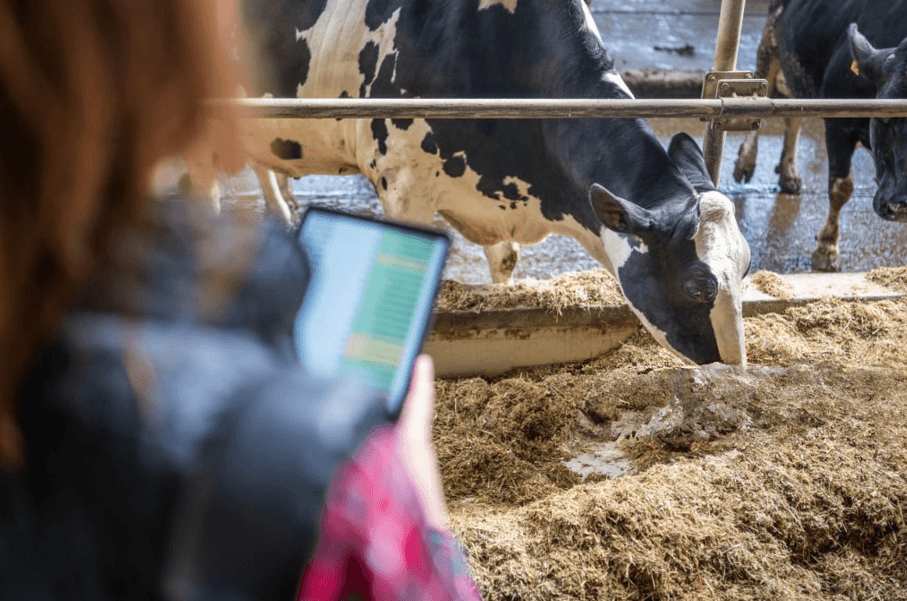
The Hidden Leak on Dairy Farms
Feed shortages don’t shout. They don’t break fences or cause sudden losses.
They silently drain income every single day.
Research across smallholder dairy systems shows that:
• Feed shortages are the number one challenge, affecting over 30% of dairy farmers
• They directly reduce milk production and farm profitability
So when feed is short, the problem is not just feeding, it is business loss.
First Cost: Immediate Milk Loss
This is the most obvious, and the most painful.
When feed reduces:
• Cows eat less
• Energy intake drops
• Milk production falls
In some drought situations, milk production can drop by over 50% when fodder becomes scarce.
That means:
• Daily income is cut in half
• Yet most costs (labour, loans, veterinary care) remain the same
Second Cost: The Cow Starts “Eating Itself”
When feed is not enough, the cow does something dangerous:
It uses its own body reserves to continue producing milk.
At first, this looks like resilience.
But soon:
• Body weight drops
• Immunity weakens
• Production collapses
And recovery takes time, sometimes months.
Third Cost: Fertility Problems
Here’s where losses become long-term.
Poor nutrition leads to:
• Delayed heat
• Failed conception
• Longer calving intervals
A cow that should produce one calf per year may delay…
And every missed cycle is lost future income.
Fourth Cost: Higher Recovery Expenses
After the dry season, many farmers try to “fix” the problem quickly:
• Buying expensive concentrates
• Treating weak cows
• Rebuilding body condition
But recovery is always more expensive than prevention.
Fifth Cost: Feed Becomes More Expensive
Ironically, feed is cheapest when farmers don’t need it.
During the dry season:
• Hay and silage prices rise sharply
• Supply becomes unreliable
• Quality often drops
So farmers end up:
• Paying more
• Getting less value
A Cost Many Farmers Don’t Measure
Feed shortages don’t just reduce milk, they reduce efficiency.
There is a concept in dairy farming called the milk-to-feed ratio, which determines profitability. When feed becomes scarce or expensive, profitability drops quickly.
In simple terms:
The less efficiently feed is converted into milk, the less money the farmer makes.
The Chain Reaction
Feed shortage is not one problem. It creates many:
• Less milk
• Weak cows
• Poor fertility
• Higher costs
• Lower profits
And all of this starts with one missing plan.
The Good News
Unlike disease or market prices, feed shortages are predictable.
Dry seasons come every year.
Which means:
• Farmers who plan → maintain milk
• Farmers who don’t → lose income
The difference is preparation.
The Bottom Line
Feed shortages are expensive, not because of the feed itself, but because of what they cause:
• Immediate loss of milk income
• Long-term damage to cows
• Increased recovery costs
• Reduced farm profitability
In dairy farming, feed is not just an input, it is the foundation of income.
📞 Take Action
Don’t wait for the dry season to expose the cost of poor planning.
Radiant Farm Uganda Limited provides quality hay and maize silage to help farmers avoid feed shortages and maintain stable milk production throughout the year.
Contact Radiant Farm today and protect your milk, your cows, and your income. Order forage from our website (click here) or from the nearby authorised dealer (click here to find out more)
🐄🌾😉 Call / WhatsApp to confirm your Hay or Maize silage ORDER NOW!
📲📞 +256 790 810 337
📲📞 +256 702 350 821
📲 📞+256 702 760 564
📩 Email: kampala@radiantfarmug.com
📍 Farm Location: Plot 5 Kitotolo Road, Nsangabwami Kikandwa, Mityana - Uganda.
By Oliver Namirimu,
The Manager - Production and Operations at Radiant Farm, specializing in sustainable farming practices and animal nutrition.
Please subscribe to our newsletter ( https://radiantfarmug.com/ ) for more updates from Radiant Farm Uganda.