Start by Watching the Feeding Area
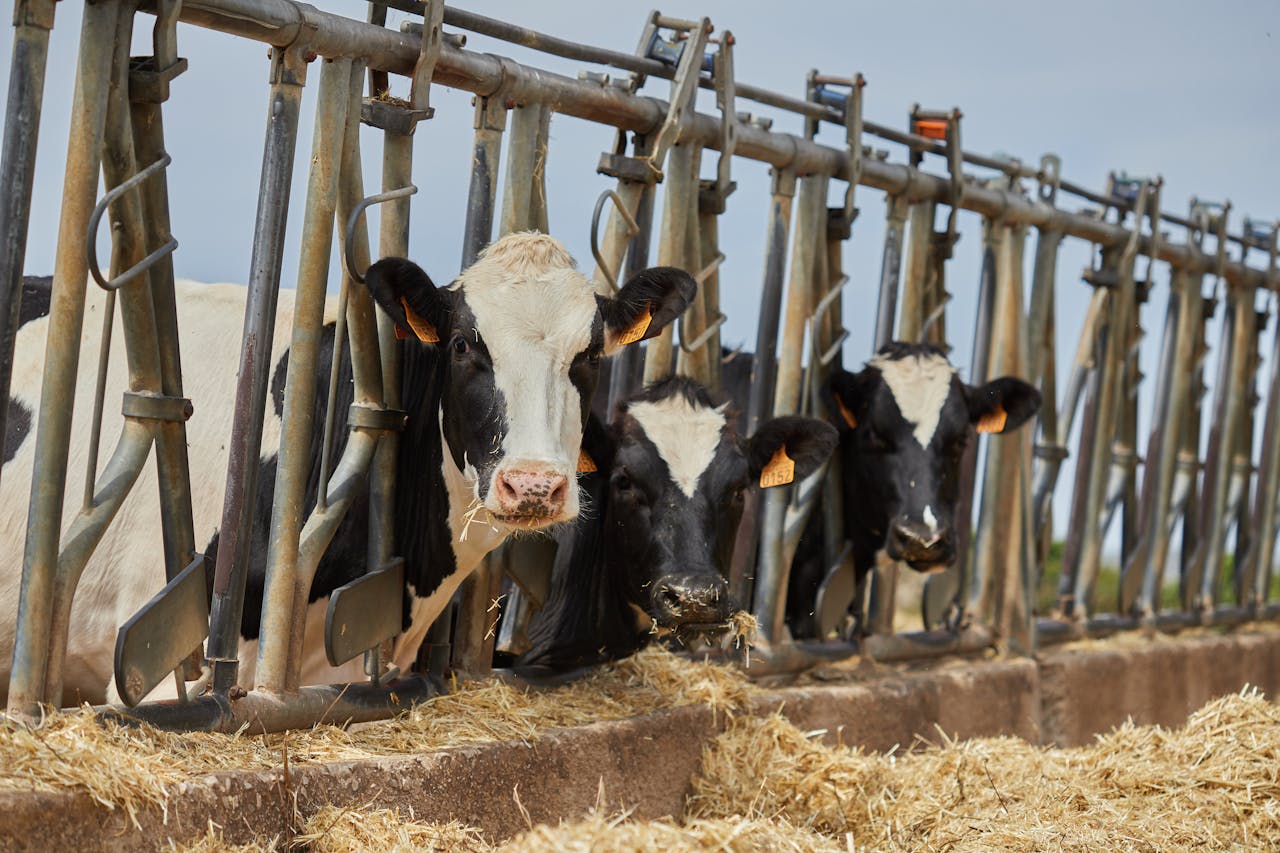
Before changing anything, observe your feeding area after cows have eaten.
Ask yourself:
* Is feed falling on the ground?
* Are cows stepping on hay or silage?
* Is leftover feed getting wet?
* Are some cows eating more while others are pushed away?
* Is feed being served in excess without monitoring?
The feeding area tells the truth. If feed is scattered, dirty, or trampled, the farm is losing money.
Use Proper Feed Troughs
Feeding cows directly on the ground leads to high wastage.
Cows step on the feed, mix it with dung, and refuse to eat it later. This is especially common with hay and chopped forage.
Simple troughs can make a big difference. They should be:
* strong enough for daily use;
* easy to clean;
* raised from the ground;
* wide enough for cows to feed comfortably.
A good trough keeps feed clean and encourages cows to eat more of what is provided.
Feed the Right Amount
Some farmers waste feed by giving too much at once. Others give too little, causing cows to fight or rush.
The best approach is to feed according to the number of cows and their production level.
As a practical guide:
* a milking cow may need about 20–30 kg of silage per day, depending on size and milk yield;
* good hay should be offered in amounts the cow can consume without trampling or spoiling;
* concentrates should be measured carefully, not guessed.
Feeding should be generous, but controlled.
A small amount of clean leftover forage in the morning can show cows were not hungry overnight. But large amounts of spoiled leftovers show poor feed management.
Store Hay and Silage Properly
Many farmers lose feed before it even reaches the cow.
Poor storage leads to:
* moldy hay;
* rotten silage;
* moisture damage;
* rodent contamination;
* loss of feed quality.
Hay should be stored in a dry, raised, well-covered place. Silage should remain sealed properly and opened gradually to avoid exposure to air.
Remember: spoiled feed is not only wasted money. It can also reduce milk production and affect cow health.
Reduce Fighting at Feeding Time
When cows compete for feed, wastage increases.
Stronger cows push weaker cows away. Some cows overeat while others remain underfed. Feed is also spilled as cows fight for space.
To reduce this:
* provide enough feeding space;
* separate young, weak, or heavily pregnant animals where possible;
* feed at consistent times;
* avoid overcrowding around the trough.
A calm feeding environment improves intake and reduces losses.
Chop Forage Properly
Long, rough, poorly prepared forage is often wasted.
Cows may pull it from the trough, select only the softer parts, and leave the rest. Chopping forage into manageable pieces helps cows eat more and waste less.
For silage, uniform chopping also supports better fermentation and easier feeding.
Good preparation before feeding leads to better use by the cow.
Protect Feed From Rain and Sun
Feed left in the open quickly loses value.
Rain causes spoilage. Strong sun dries and hardens some feeds. Wind scatters loose hay. Once feed becomes dirty or unattractive, cows eat less of it.
Serve feed in a protected area where possible. Keep stored feed covered. Do not open more silage than the cows can consume within a short time.
Keep Water Available
This may sound unrelated, but water affects feed wastage.
When cows do not drink enough water, they eat less. Feed remains in the trough and later spoils.
Clean water encourages cows to eat properly and digest feed well. A cow that drinks well usually feeds better, and produces better.
Track Feed Against Milk
The best farmers do not only ask, “How much feed did I give?”
They also ask, “How much milk did I get from that feed?”
Keep simple records:
* feed used per day;
* milk produced per day;
* feed leftovers;
* changes in cow body condition.
This helps the farmer know whether feed is being used efficiently or wasted.
The Bottom Line
Reducing feed wastage is one of the easiest ways to improve dairy farm profit.
A farmer does not always need more feed. Sometimes, the farmer needs to manage existing feed better.
To reduce wastage:
* use proper troughs;
* feed the right amounts;
* store hay and silage properly;
* reduce overcrowding;
* chop forage well;
* protect feed from weather;
* provide clean water;
* monitor feed against milk.
Less wastage means more feed reaches the cow, and more value reaches the farmer.
Take Action
Do not allow valuable feed to be lost through poor handling, storage, or feeding practices.
Radiant Farm Uganda Limited provides quality shredded hay (ready for mixing) and maize silage to help dairy farmers feed more efficiently, reduce wastage, and maintain strong milk production throughout the year.
📞Contact Radiant Farm today and make every kilogram of feed count.🐄🌽🌾
Order forage from our website (click here) or from the nearby authorised dealer (click here to find out more)
😉 Call / WhatsApp to confirm your Hay or Maize silage ORDER NOW!
📲📞 +256 790 810 337
📲📞 +256 702 350 821
📲 📞+256 702 760 564
📩 Email: kampala@radiantfarmug.com
📍 Farm Location: Plot 5 Kitotolo Road, Nsangabwami Kikandwa, Mityana - Uganda.
By Oliver Namirimu,
The Manager - Production and Operations at Radiant Farm, specializing in sustainable farming practices and animal nutrition.
Please subscribe to our newsletter ( https://radiantfarmug.com/ ) for more updates from Radiant Farm Uganda.